


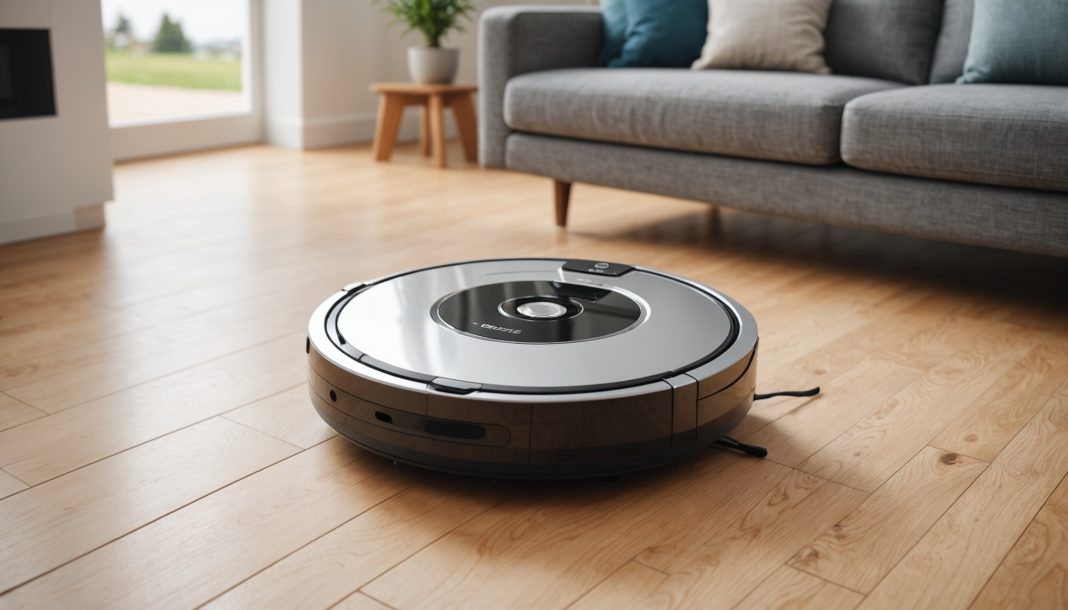
The robot vacuum has become a staple in many homes for automating everyday cleaning, but not all models are created equal, and a poor choice quickly turns into frustration or premature breakdowns. Before investing, it's worth knowing the criteria that really make a difference, the most common pitfalls, and the maintenance habits that extend the appliance's lifespan.
The Criteria That Really Matter
On paper, every model promises a spotless home at the touch of a button. In reality, navigation quality changes everything: a robot equipped with laser mapping avoids obstacles and never cleans the same spot twice, while a budget model moves at random and misses entire areas. Suction power, measured in pascals, is also worth comparing: beyond the spec sheet, independent tests like those published by UFC-Que Choisir (a French consumer protection association) give a more reliable picture of real-world performance than manufacturer figures. To compare several product families before deciding, Target's robot vacuum section lists the main lineups available, from entry-level models to all-in-one stations.
Battery life and the robot's ability to return on its own to recharge before finishing a cleaning cycle are also crucial for large homes. Finally, compatibility with a mobile app or voice assistant remains a convenience, not a necessity: a well-designed robot should first and foremost clean effectively—everything else is just a bonus.
Mistakes to Avoid
- Choosing based on price alone, without checking compatibility with your flooring type (thick carpet, tile, hardwood) or whether a door threshold is too high for the appliance.
- Overlooking the size of the dustbin and how often it needs emptying, especially if you have pets.
- Ignoring the cost of consumables (brushes, filters, mopping pads): they wear out within a few months and add to the appliance's real cost. The guide on replacement parts for home appliances offers useful benchmarks for anticipating these expenses.
- Placing the docking station in a cluttered or poorly ventilated spot, which disrupts the robot's return and prematurely wears out the electronics.
Maintenance, Lifespan, and Warranty
A properly maintained robot lasts four to six years on average, provided the brushes, turbine, and sensors are cleaned regularly and the filters are replaced according to the manufacturer's recommendations. In terms of power consumption, the contrast with a traditional vacuum cleaner is striking: while a standard vacuum runs at 1,500-2,000 watts for about twenty minutes, a robot typically operates between 15 and 60 watts, but over a longer period and with standby consumption that's best limited by unplugging the station once charging is complete.
Like any home appliance sold in France, the robot vacuum comes with a two-year legal conformity warranty, detailed on the economie.gouv.fr website (the French Ministry of the Economy). It covers defects affecting the structure or electronics, but not normal wear of consumables. Also worth noting: the right to repair for home appliances is evolving and can work in the buyer's favor in the event of a breakdown after the warranty expires, particularly for easily replaceable parts.
Finally, a robot vacuum doesn't completely eliminate the need for manual cleaning: an occasional sweep in hard-to-reach corners and well-chosen furniture make its job easier. Those rethinking their home layout will find a good excuse to do so, as shown by current furnishing and appliance trends designed to clear floor space.
Frequently Asked Questions
Does a Robot Vacuum Completely Replace a Traditional Vacuum Cleaner?
Not entirely: it provides regular upkeep of open floor areas, but a traditional vacuum remains useful for hard-to-reach corners, stairs, or an occasional deeper clean.
What Suction Power Should You Choose?
There's no universal threshold: it's better to rely on independent comparisons than on manufacturer figures alone, since the suction power advertised in pascals doesn't always reflect real-world effectiveness on every type of flooring.
How Long Does a Robot Vacuum Last?
On average, four to six years with regular maintenance (cleaning the brushes and sensors, replacing filters), with some well-maintained models lasting well beyond that.
Sources
- UFC-Que Choisir — Robot vacuum comparison
- economie.gouv.fr — The legal conformity warranty
- Selectra — Robot vacuum power consumption
This article was written with the help of artificial intelligence. Editorial policy

