


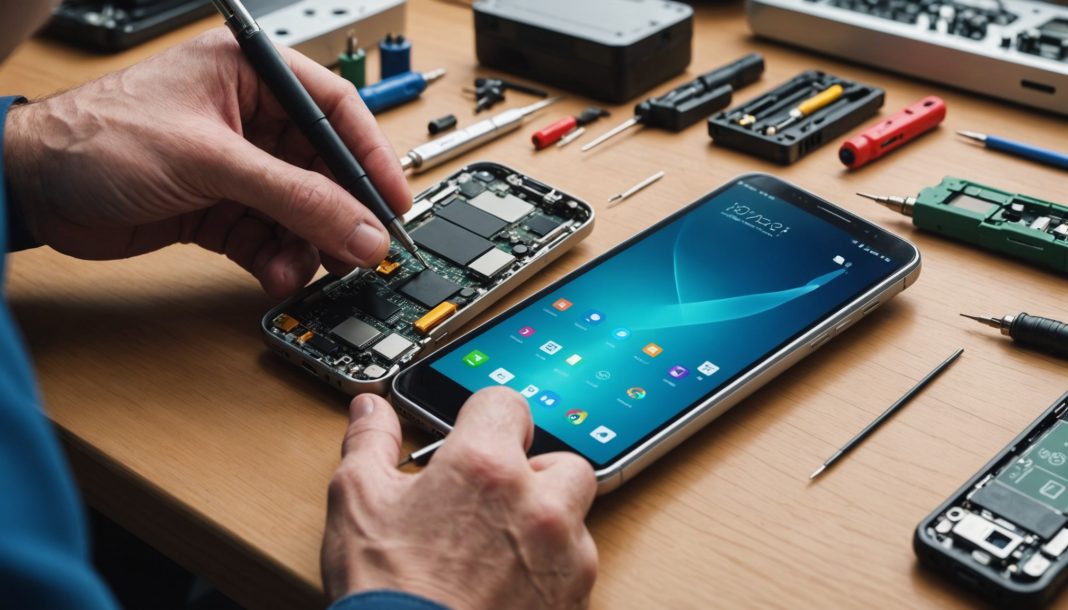
Getting your smartphone or washing machine repaired instead of buying a new one could soon become a more natural reflex. Since July 31, the right to repair has been strengthened in France as part of a European regulation, with new obligations for manufacturers and new benefits for consumers.
A reform designed to fight the throwaway culture
The problem is well known: too many household appliances and electronic devices end up in the trash when a repair would have been enough to give them a second life. To reverse this trend, the new regulation now requires manufacturers to repair defective products at a reasonable price, even after the legal warranty has expired, as long as the repair is technically possible. Smartphones, vacuum cleaners, refrigerators, and washing machines are among the first categories affected.
What's actually changing for consumers
Specifically, several measures are now in place:
- Manufacturers must offer a repair within a reasonable timeframe and at a price that doesn't discourage consumers from choosing it;
- If the device is repaired rather than replaced during the first two years of the legal conformity warranty, the warranty is now extended by one year, compared to just six months previously;
- Beyond this warranty, a genuine right to repair applies for a list of products deemed “technically repairable,” updated every year at the European level;
- Manufacturers are no longer allowed to put in place contractual, physical, or software obstacles that would prevent a repair by an independent professional.
Why this change concerns everyone
This reform builds on the repairability index, already displayed on many products for several years, which is gradually evolving into a more comprehensive durability index incorporating reliability and ease-of-maintenance criteria. The stated goal is twofold: reduce the volume of electronic and household appliance waste, while giving back purchasing power to households who will no longer systematically have to buy a new device in the event of a breakdown.
For households keeping a close eye on high-tech news, this change is worth knowing before the next smartphone or appliance purchase: favoring brands with a good repairability index becomes an even more strategic choice. When it comes to household budgets, the extended warranty in case of repair can represent a significant savings over the long term. A few simple tips can already help devices last longer: regular maintenance, software updates, or turning to a certified repair technician before considering a replacement.
It remains to be seen whether this still-recent obligation will be fully enforced by all manufacturers. Consumer advocacy groups say they are already closely monitoring its implementation in the coming months.
Frequently Asked Questions
Since when has the strengthened right to repair applied in France?
This new European regulation, transposed into French law, has applied since July 31, 2026.
Which devices are covered by this reform?
Smartphones, vacuum cleaners, refrigerators, and washing machines are among the first categories targeted; the list of “technically repairable” products is updated every year at the European level.
What's the concrete benefit for consumers?
If a device is repaired during the first two years of the legal conformity warranty, that warranty is now extended by one year instead of six months, in addition to a right to repair at a reasonable price even after the warranty has expired.
Sources
Service-Public.fr – New rules to encourage the repair of broken devices
Varactu – Right to repair: what's changing since July 31, 2026
Reparea – Right to repair in France 2026: laws and obligations
This article was written with the help of artificial intelligence. Editorial policy

