


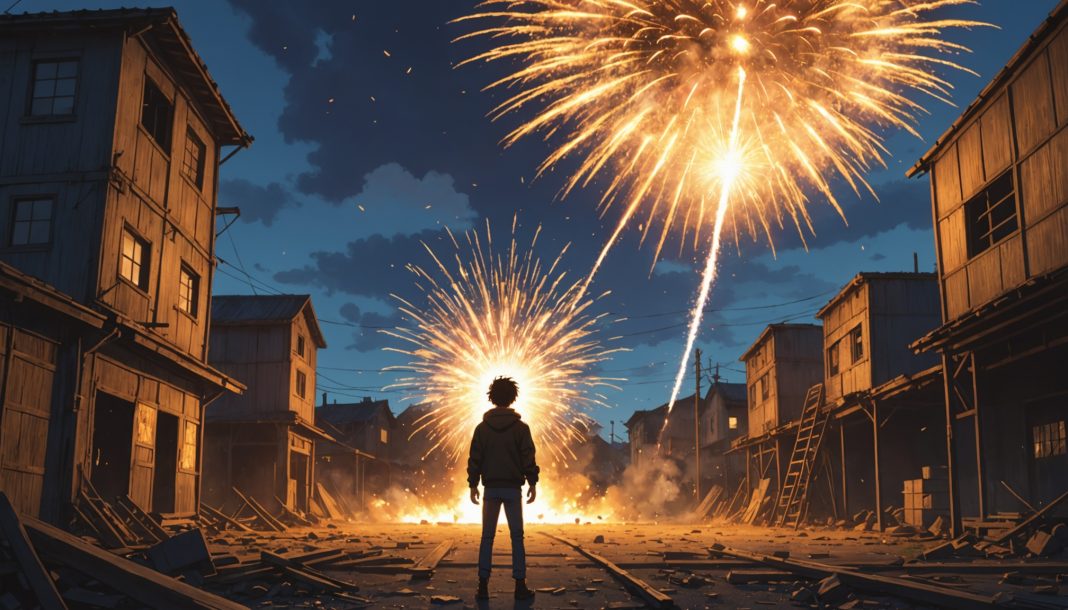
Following the international triumph of Your Name, Japanese animated cinema may have found its new phenomenon. A New Dawn, the first feature film by Yoshitoshi Shinomiya, arrived in French theaters on August 12, 2026, carried by remarkably refined animation and a story of family legacy that is already touching critics.
A First Film Carried by an Animation Veteran
Yoshitoshi Shinomiya is no stranger to the industry. Before signing this first feature as director, he spent years working as animation director and head of special scenes on notable works, in both live-action and animation. His contributions include work on Your Name by Makoto Shinkai and In This Corner of the World by Sunao Katabuchi, two films that have become genre benchmarks. This experience shows on screen: the sets are meticulously crafted, the art direction embraces bold color palettes, and every shot seems designed to showcase light, the story's central theme.
A Story of Legacy and Final Tribute
The film follows Keitaro, who has withdrawn from the world for several years in his family's former fireworks factory, now threatened with administrative closure. The site, once nestled in a lush forest, is today surrounded by solar panels and a local road about to cut through the property. Before the site is seized, Keitaro is determined to recreate the shuhari, a mythical firework meant to represent the universe, designed by his father just before his death. For this final attempt, he enlists his brother Chicchi and Kaoru, their childhood friend: a trio that will have to grapple with memories, things left unsaid, and the urgency of time running out.
This French-Japanese co-production was first released in Japan in July 2026, before reaching French screens a few weeks later. A tight schedule that reflects distributors' growing appetite for auteur Japanese animation, beyond the studios already established in the mainstream landscape.
Why This Film Stands Out in Current Production
In a market saturated with sequels and adaptations of already-established franchises, A New Dawn bets on an original story and a tighter format, far from sprawling franchises. Early reviews particularly praise:
- Direction that favors restrained emotion over spectacular effects;
- A visual treatment of fireworks conceived as a metaphor for memory and legacy;
- A narrative told from a teenager's perspective, without moralizing or artificial twists.
The film thus fits into a broader trend observed this year: Japanese studios are increasingly releasing feature films led by new directors, with more modest budgets than major productions, but a clear artistic ambition. For fans of Japanese literature and culture, this film adds to an already busy season of adaptations and releases.
Where and How to See the Film
A New Dawn is currently available in its original subtitled version in participating theaters in France. For those who prefer a trip to the theater rather than waiting for a streaming release, it's best to check available showtimes quickly, as this type of auteur film is generally scheduled for only a limited number of weeks. Fans of cultural outings will find other ideas for things to do in our leisure and entertainment pages, while those who'd rather wait can follow its eventual arrival on streaming platforms through our streaming and downloads section.
Frequently Asked Questions
What is the movie A New Dawn about?
The film tells the story of Keitaro, who tries to recreate a mythical firework designed by his late father before the family factory is shut down. He is helped by his brother and a childhood friend for this final attempt.
Who directed A New Dawn?
It was directed by Yoshitoshi Shinomiya, who makes his debut as a feature film director here after working as an animation director on films such as Your Name and In This Corner of the World.
When was the film released in France?
A New Dawn was released in French theaters on August 12, 2026, following its initial release in Japan in July of the same year.
Sources
Manga News — Animation Digital Network — AlloCiné
This article was written with the help of artificial intelligence. Editorial policy

