


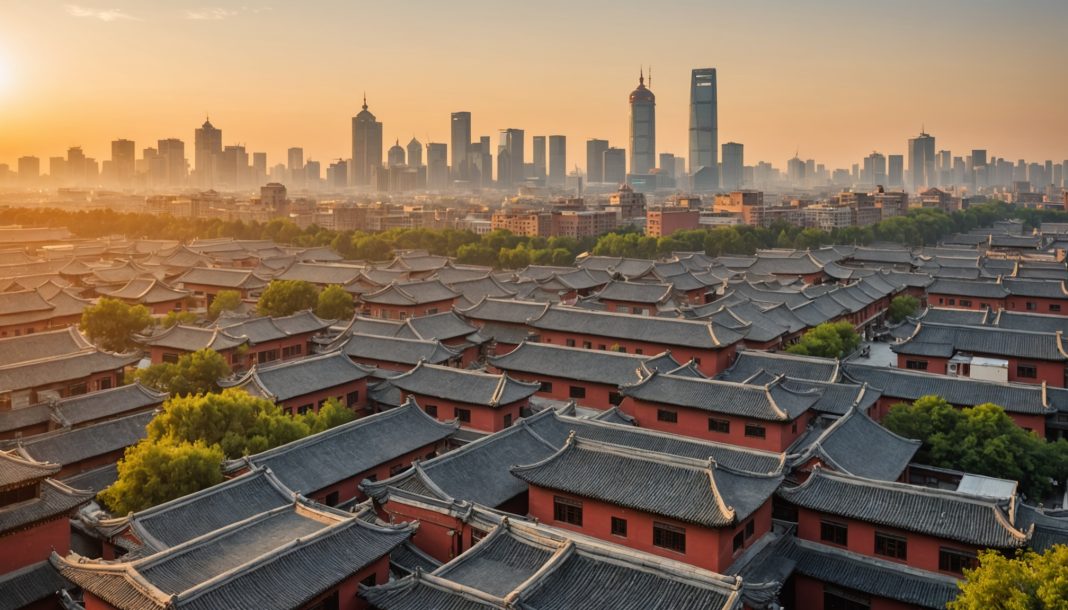
Every three years, UNESCO and the International Union of Architects (UIA) designate a host city to carry, for one year, the title of World Capital of Architecture. After Rio de Janeiro, Copenhagen, and then Barcelona, it is now Beijing's turn to receive this distinction for the year 2029, a choice announced in early August by the UN agency.
The Chinese capital was selected for its ability to reconcile one of the richest architectural heritages in the world with a vision firmly focused on sustainable urban planning. Its historic urban fabric, its major rehabilitation projects, and the vitality of its contemporary architectural scene all weighed into the decision of the joint UNESCO-UIA jury.
A label designed to accompany the world congress of architects
In practical terms, the World Capital of Architecture is the city that hosts, during its term, the UIA World Congress—an international gathering of professionals, urban planners, and researchers. Beijing will therefore organize this event in 2029, under the theme “Back to Balance”, conceived as a bridge between culture, nature, and the daily life of residents.
- The label has been awarded every three years since its creation.
- Rio de Janeiro (2020), Copenhagen, and Barcelona preceded Beijing on the list of honorees.
- The designation comes with hosting the UIA World Congress.
- The theme chosen for 2029, “Back to Balance,” emphasizes reconciling built heritage with climate challenges.
Why this choice also speaks to travel and decor enthusiasts
Beyond its diplomatic symbolism, this distinction has a tangible impact on cultural tourism and urban appeal. In the months leading up to their congresses, previous World Capitals of Architecture have seen a surge of exhibitions, heritage trails, and tourism promotion initiatives centered on their historic districts and contemporary achievements. Beijing, with its unique blend of preserved hutongs, imperial remains, and sustainable architecture projects, fits into this same dynamic.
For fans of architecture and culture, this label is also an opportunity to follow, over the coming years, how a megacity of more than 21 million residents intends to reconcile urban growth with energy efficiency—a challenge shared by many major cities around the world.
A recognition that fits within an international timeline
Beijing's designation comes as several major metropolises are stepping up initiatives around urban renewal and bioclimatic architecture. The UNESCO-UIA jury's choice notably highlights the successful regeneration projects carried out in the Chinese capital in recent years, which have managed to combine the preservation of older buildings with the integration of new uses.
Between now and 2029, the city will therefore prepare to host the World Congress of Architects, an event expected to draw several thousand professionals from around the world and to showcase, over several days, the major trends in contemporary architecture.
Frequently Asked Questions
What is the World Capital of Architecture?
It is a label awarded every three years by UNESCO and the International Union of Architects to a city that will host the UIA World Congress, in recognition of the quality of its heritage and its urban projects.
Which cities have already received this distinction?
Rio de Janeiro inaugurated the label in 2020, followed by Copenhagen and then Barcelona. Beijing is therefore the fourth city designated, for the year 2029.
What theme has Beijing chosen for 2029?
The Chinese capital has chosen the theme “Back to Balance,” which emphasizes balance between heritage, innovation, and environmental respect in urban development.
Sources
UNESCO — Heritage and innovation make Beijing World Capital of Architecture 2029
CGTN — Beijing designated as UNESCO-UIA World Capital of Architecture 2029
Xinhua — The city of Beijing designated UNESCO-UIA World Capital of Architecture for 2029
This article was written with the help of artificial intelligence. Editorial policy

