


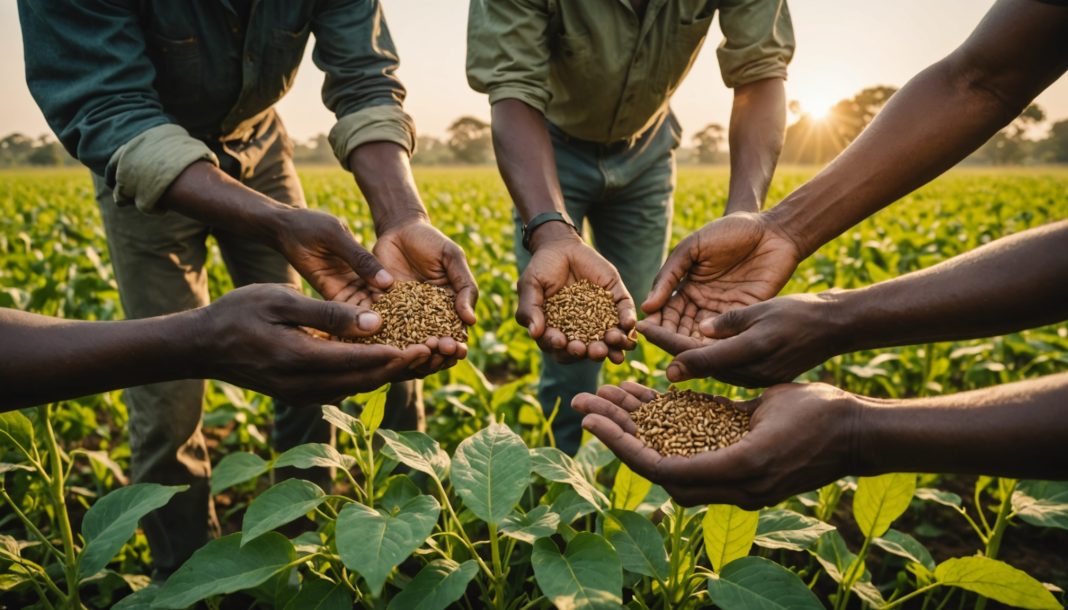
As droughts multiply and crop biodiversity erodes at an accelerating pace, a quiet but decisive movement is gaining momentum across the African continent: the race for resilient seeds. Researchers, farmers, and farmer organizations are joining forces to preserve local varieties while developing seeds capable of withstanding heat and water scarcity. This is an issue that extends far beyond Africa's borders, since global food security depends heavily on the genetic diversity of crops.
A Genetic Heritage Eroding Rapidly
According to a report published in early February 2026 by the Food and Agriculture Organization of the United Nations (FAO), the disappearance of local varieties and wild species related to crops is accelerating across the African continent. This decline in plant genetic capital is weakening the ability of agricultural systems to adapt to climate disruptions, even though these ancient varieties often constitute the best reserve of genes for resistance to drought, disease, or poor soils.
The Response Takes Shape on the Ground
In response to this situation, several concrete initiatives are being rolled out at the regional level. In East Africa, a program covering four countries has produced more than 956 tons of improved seeds and provided technical support to over 160,000 farmers, facilitating access to heat-tolerant and drought-resistant varieties. These seeds, often the result of crossbreeding between farmer varieties and improved lines, help secure harvests in areas increasingly exposed to climate hazards.
At the same time, seed governance is also the focus of unprecedented mobilization. In early June 2026, the 4th Pan-African Conference on Seed Governance was held in N'Djamena, Chad, bringing together farmer organizations, researchers, local authorities, and development partners from twenty African countries. Participants adopted a joint declaration calling for the protection of seed systems managed by farmers themselves, deemed essential to the continent's food sovereignty.
Why This Also Matters to Consumers Outside Africa
The diversity of agricultural seeds is not a purely local issue: it underpins the stability of global food prices and our collective ability to cope with future climate shocks. A continent that loses its resistant varieties becomes more vulnerable to poor harvests, with potential repercussions for export markets of agricultural raw materials. Preserving this heritage also means preserving a form of collective insurance against climate uncertainty.
Key Figures to Remember
- More than 956 tons of improved seeds produced under the East African program
- More than 160,000 farmers benefiting from direct technical support
- 20 African countries represented at the N'Djamena conference in June 2026
- An FAO report published in February 2026 warning of the erosion of plant genetic heritage
Common Misconceptions About Resilient Seeds
Contrary to a widespread belief, a so-called “resilient” seed is not necessarily a seed produced in a high-tech laboratory: it is very often an old farmer variety, selected over generations for its local robustness, which current programs are precisely seeking to document and multiply rather than replace. African agricultural resilience therefore relies as much on scientific research as on farmers' collective memory.
What to Remember
- African crop biodiversity is declining faster than it can naturally regenerate
- Regional programs combine agronomic research with on-the-ground distribution
- Farmer-led seed governance is now recognized as a pillar of food security
- The effects of this dynamic extend beyond the African continent alone
To learn more about climate-related issues, check out our Ecology – Climate section, or for tips on gardening and crops, our Home and Garden section. Those who enjoy discovering new places abroad can also find our articles in the Travel – Tourism section.
Frequently Asked Questions
What Is a Resilient Seed?
It is a cultivated plant variety that can better withstand difficult conditions such as drought, heat, or poor soils, whether it comes from traditional farmer selection or agronomic research programs.
Why Is African Seed Biodiversity Declining?
According to the FAO, several factors are combining: the gradual abandonment of certain local varieties in favor of standardized crops, growing climate pressure, and the disappearance of certain wild species related to crops.
Who Is Leading Seed Preservation Initiatives in Africa?
Regional farmer organizations, agronomic research institutes, governments, and international development partners are collaborating, as illustrated by the Pan-African conference in N'Djamena in June 2026.
Sources
Alliance for Food Sovereignty in Africa (AFSA) – Africa Presse, reporting on the FAO report – AllAfrica
This article was written with the help of artificial intelligence. Editorial policy

