


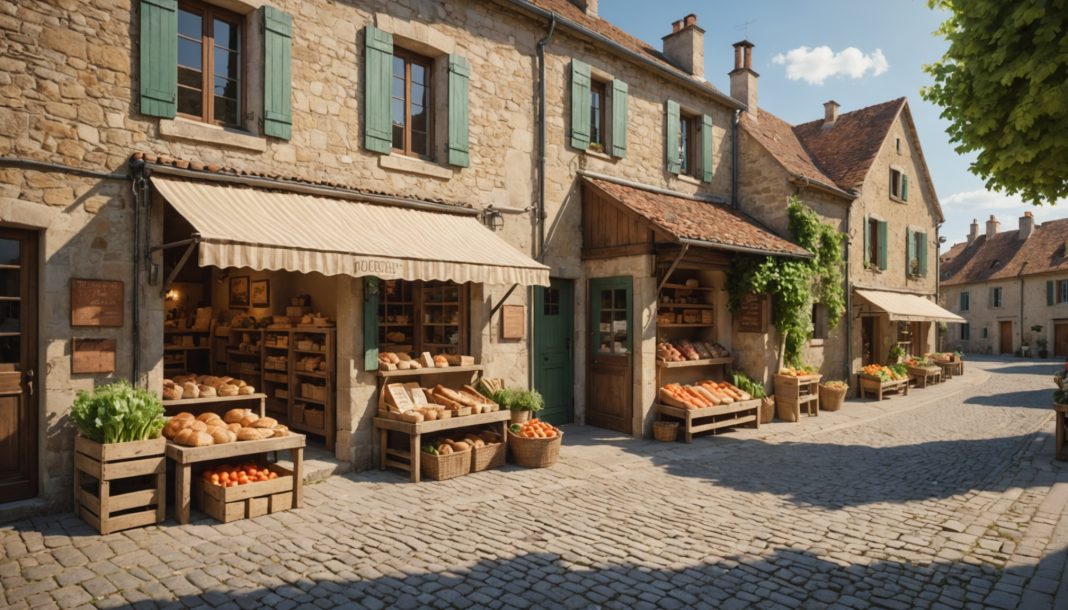
A bakery closing, a grocery store pulling down its shutters, the last café in the village disappearing: as of December 31, 2023, more than six out of ten French municipalities no longer had a single retail business. In response, the rural commerce support fund has just announced its second wave of winners for 2026, with 42 new projects set to breathe new life into local services in villages.
73 Projects Supported Since January 2026
Led by the Directorate General for Enterprises (the DGE, under the French Ministry of the Economy), this second wave was announced on July 29, 2026. It covers 42 winners located in 61 municipalities across ten mainland regions. Together with the first wave in June, which had already selected 31 projects, 73 initiatives are now receiving financial support this year.
The program finances the establishment, modernization, or takeover of multi-service businesses, whether fixed or mobile: bakeries, butcher shops, café-restaurants, multi-service grocery stores, as well as mobile shops and fresh produce rounds that serve several municipalities at once. Two-thirds of the selected projects are located in France Ruralités Revitalisation zones (a French designation for areas eligible for rural revitalization support), and seven of them are part of the Villages d'Avenir (“Villages of the Future”) program, aimed at rural municipalities with fewer than 3,500 residents.
Nearly €20 Million Mobilized Since 2023
Since it was created, the fund has supported about 1,200 municipalities and affects more than one million rural residents, with a cumulative budget of €20.1 million. Each project can receive an average of between €20,000 and €50,000, an amount designed to cover the purchase of equipment, the fitting out of premises, or the acquisition of a vehicle for mobile rounds.
In the June wave, the regional breakdown already illustrated the program's territorial scope: Auvergne-Rhône-Alpes led with nine projects, followed by Occitanie with eight, then Nouvelle-Aquitaine and Grand Est. The stated goal remains the same everywhere: to prevent residents, sometimes elderly or with limited mobility, from having to travel dozens of kilometers to buy bread or run a quick errand.
An Issue That Goes Beyond Commerce
Beyond the purely commercial aspect, these projects help maintain local social ties and boost the appeal of rural areas. A multi-service business in a rural area often becomes a meeting point, sometimes even a hub for simple administrative tasks or a package pickup point. This trend is part of a broader movement toward local services, in which local authorities and private players are working to recreate essential first-line services in the least densely populated areas. Project leaders can also turn to business start-up support programs, with some combining several public subsidies to secure their venture.
The next waves of approvals are expected in the coming months, as the fund operates through successive calls for applications. Interested project leaders can inquire directly with local chambers of commerce or prefecture offices, often in connection with local financing programs already in place in their areas.
Frequently Asked Questions
Who can benefit from the rural commerce support fund?
Project leaders looking to establish, modernize, or take over a fixed or mobile multi-service business in a rural municipality can apply, with priority given to areas classified as France Ruralités Revitalisation zones.
What is the average amount of the grants awarded?
Each selected project can receive an average of between €20,000 and €50,000, depending on the nature and scale of the planned installation or takeover.
How many municipalities have already been supported since the fund was created?
Since 2023, about 1,200 municipalities have benefited from the program, affecting more than one million rural residents, with a cumulative budget of €20.1 million.
Sources
- Directorate General for Enterprises
- Le Gâtinais Express
- Ministries of Ecological Transition and Territorial Planning
This article was written with the help of artificial intelligence. Editorial policy

