


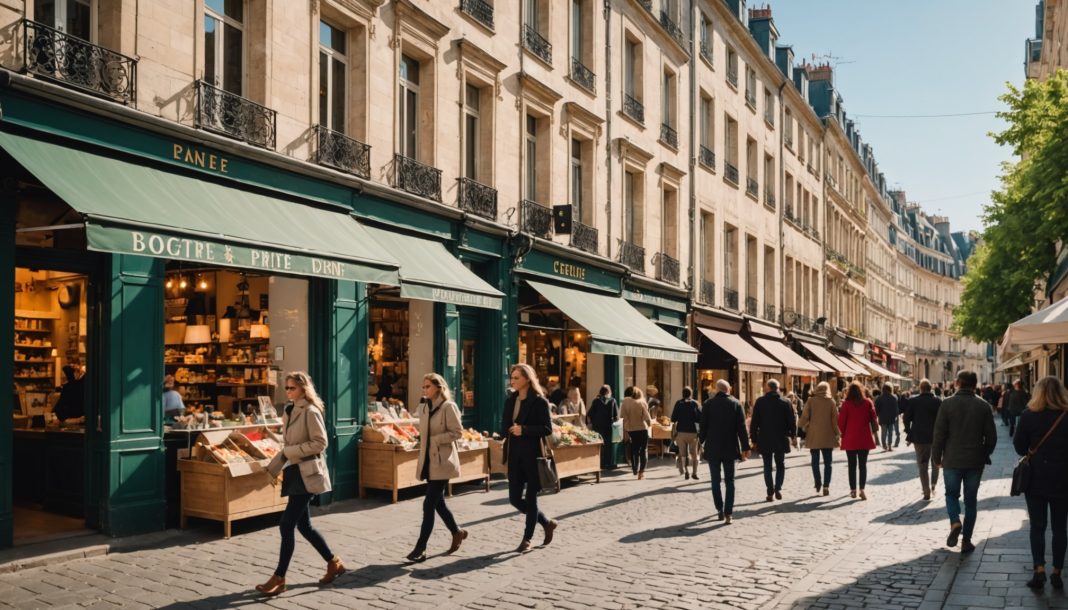
Shuttered storefronts, lowered gates, empty windows: local businesses are going through a quiet crisis in many downtown areas across France. Faced with this reality, the government has just unveiled a nine-measure plan to bring shopping streets back to life, backed by a substantial budget and a rollout schedule spanning all of 2026.
One in Seven Downtown Storefronts Now Vacant
The number speaks for itself: the retail vacancy rate in downtown areas reached 14% in 2024, a level that has more than doubled in fifteen years, up from just 6% in 2010. The situation varies sharply by region: the rate drops to 9.8% in Brittany but climbs as high as 13.4% in Occitanie. Mid-sized cities are being hit the hardest, squeezed between competition from peripheral shopping zones and the growing dominance of e-commerce. It is this finding, laid out in a report submitted in November 2025, that laid the groundwork for the action plan the government presented today.
Three Pillars and a Bigger Budget for 2026
The plan is built around three complementary pillars. The first is funding: an additional €100 million is being mobilized in 2026 through the Banque des Territoires (France's public investment bank for local and regional development), earmarked for revitalization real estate trusts that buy back and renovate vacant commercial spaces. A further €20 million is set to fund commerce managers in the most struggling areas, tasked with coordinating local business outreach. This funding builds on existing programs, including Action Cœur de Ville, Petites Villes de Demain, and Villages d'Avenir.
The second pillar focuses on supporting shop owners directly: rolling out artificial intelligence tools tailored to retail, reforming the tax on vacant commercial properties to better target spaces that are truly empty, launching a diagnostic tool on the entreprendre.gouv.fr portal in early 2026, and creating a shared governance charter called “Cœur de Ville Marchand.” The plan also calls for tighter regulation of fast-fashion platforms, with a €2 tax on small imported packages starting in January 2026.
The third pillar targets development in the most disadvantaged areas: the “Quartier d'Entrepreneuriat 2030” program is being expanded to encourage business creation, while the experimental “Made in Local” initiative offers local artisans vacant commercial spaces under flexible leases, in towns where the vacancy rate exceeds 15%.
What This Means for Residents
- Vacant storefronts brought back onto the market more quickly, thanks to revitalization real estate trusts backed by the Banque des Territoires.
- Stronger support for independent shop owners, with digital tools and taxation better targeted at vacant commercial properties.
- Special attention to priority neighborhoods and mid-sized cities, through the Quartier d'Entrepreneuriat 2030 program and the Made in Local initiative.
- A first check on competition from ultra-fast fashion platforms, with a tax on small imported packages starting in January 2026.
Want to follow other initiatives shaping neighborhood life? Our Local Services section covers the programs changing everyday life, while Business – Companies and Consumer – Shopping break down the trends reshaping commerce in France.
Frequently Asked Questions
Why are local businesses struggling?
Downtown retail vacancy has more than doubled in fifteen years, driven by a combination of competition from peripheral shopping zones and the growth of e-commerce, particularly in mid-sized cities.
What concrete support is available for independent shop owners?
The plan includes artificial intelligence tools to help manage and promote businesses, a reform of the tax on vacant commercial spaces, and expanded support through commerce managers funded with €20 million in struggling areas.
What is the “Made in Local” initiative?
It's a pilot program that provides local artisans and shop owners with vacant commercial spaces, under flexible leases and with personalized support, in towns where the vacancy rate exceeds 15%.
Sources
This article was written with the help of artificial intelligence. Editorial policy

