


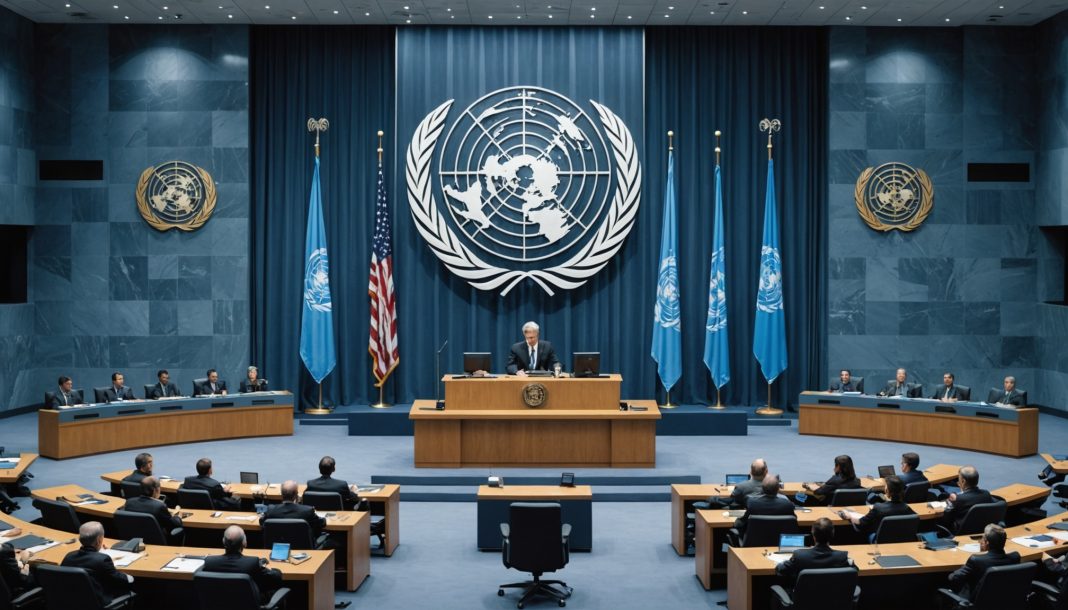
The United Nations and the International Committee of the Red Cross (ICRC) issued a renewed joint call on August 25, urging states to urgently adopt international rules governing autonomous weapons systems. UN Secretary-General António Guterres and ICRC President Mirjana Spoljaric warned that the world is “dangerously close to crossing a moral red line: the autonomous targeting of human beings by machines.”
A Call That Puts Renewed Pressure on States
This is not the first warning on the issue: as early as 2023, the UN and the ICRC had called on governments to negotiate a legally binding instrument before the end of 2026. Three years later, that deadline is about to expire with no agreement reached, which explains the more urgent tone of the joint statement. Both organizations are now calling on states to “show political courage” and open formal negotiations without delay.
Contrary to a misconception widely repeated in some media outlets, the call does not demand a total ban on all military robotics. It specifically targets systems capable of selecting and attacking a human target without direct human supervision at the moment of the lethal decision. The UN and the ICRC themselves state that they have not confirmed the use of such systems on a battlefield to date, but that their development is progressing faster than the legal framework meant to govern them.
Why Progress on This Issue Is So Slow
The technical forum where this debate is playing out already exists: the Convention on Certain Conventional Weapons (CCW), held under UN auspices in Geneva. Experts have been meeting there for more than ten years without reaching a binding text, for lack of consensus among states on the very definition of an autonomous weapon and on the level of human control to require. A new round of negotiations is scheduled for November in Geneva, presented by the UN and the ICRC as “the clearest path currently available” toward binding rules.
- Key finding: automated targeting technologies are advancing faster than multilateral diplomacy.
- Central issue: maintaining effective human control over any decision to use lethal force.
- Next concrete step: a CCW negotiating session in Geneva in November.
- Identified risk: a de facto normalization of these systems in the absence of rules, regardless of any future agreement.
For the non-specialist reader, the stakes go beyond the military sphere alone: the same debates over human oversight of automated decisions are now running through other sectors, from health care to self-driving cars, which explains the sustained attention international legal scholars are paying to this issue. Find more in-depth analysis in our Law and Justice section and the latest technological developments in High Tech – Digital.
The Bottom Line
The August 25 call creates no immediate legal obligation: it is a political statement intended to put pressure on upcoming negotiations. Its real impact will be measured at the close of the Geneva session, where states will have to say whether they are ready to turn years of technical discussions into a binding text. To follow diplomatic news as it develops, head to our National News section.
Frequently Asked Questions
What Is an Autonomous Weapons System in This Debate?
It is a system capable of selecting and engaging a target without direct human intervention at the moment the decision is made to open fire, as opposed to remote-controlled weapons where a human operator retains control.
Is the UN Calling for a Total Ban on Military Robotics?
No. The joint call targets bans and restrictions on the most problematic systems, particularly those aimed at people, rather than the full range of robotic technologies used by armed forces.
What Will Happen Concretely in the Coming Months?
State delegations will meet in Geneva in November under the Convention on Certain Conventional Weapons to try to advance a binding text, with no guarantee of reaching an agreement.
Sources
- ICRC — Renewed call from UN Secretary-General and ICRC President
- The Washington Times (AP wire) — UN and Red Cross step up call on autonomous weapons
- RTBF — Robots tueurs : l'ONU et le CICR redoutent que des machines décident de tuer
This article was written with the help of artificial intelligence. Editorial policy

