


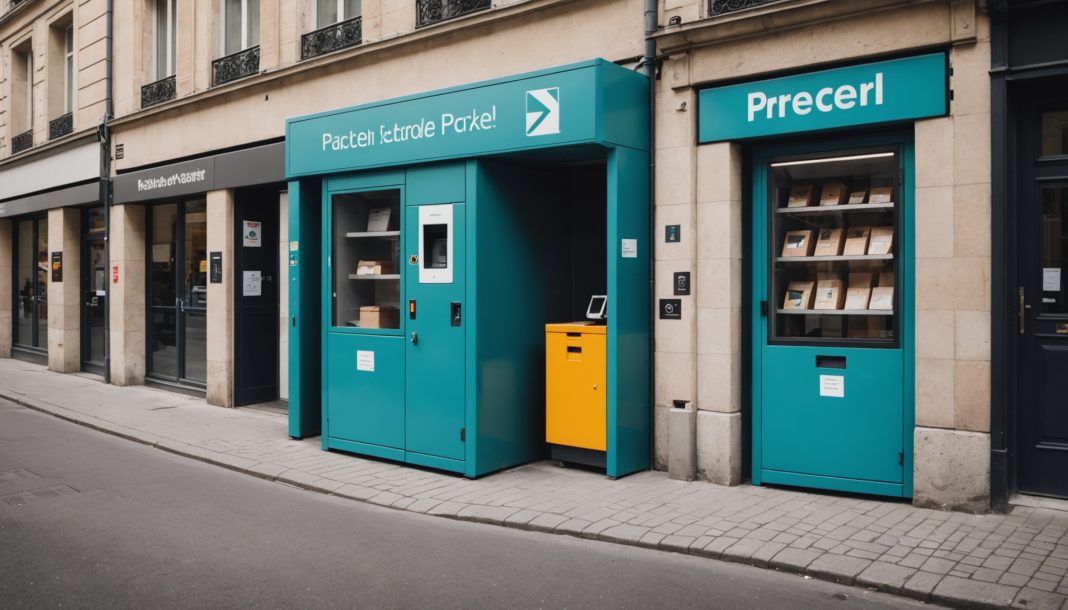
The map of parcel delivery in France is changing shape. Mondial Relay has begun closing about 3,500 pickup points out of the 11,000 in its network, in favor of automated lockers accessible 24 hours a day. A shift that worries small shopkeepers and several members of Parliament alike.
The shift toward automated lockers
Since its founding in 1997, Mondial Relay had built its success on a dense network of partner shops: tobacco-and-newspaper stores, convenience stores, dry cleaners, and florists that agreed to store customers' parcels in exchange for a commission. This model is now being challenged by automated lockers, whose numbers have tripled since 2023 to reach nearly 9,000 units nationwide. More than 1,800 lockers are reportedly already in operation, with an announced target of 4,500 by the end of the year. Their use has jumped by more than 70% in a single year, driven in particular by urban customers who appreciate the round-the-clock availability of the service.
What partner shopkeepers are losing
Thousands of shopkeepers have received a registered letter informing them of the end of their contract with the company. The loss is not trivial: the commission paid for handling parcels could reach 400 to 1,000 euros a month for the busiest locations, a significant cash-flow boost for small shops already weakened by declining foot traffic in town centers. Another side effect noted by industry players: shops that keep their pickup-point business see their foot traffic climb by more than 50%, which can create logistical strain for businesses sometimes run by a single person.
- About 3,500 pickup points closed out of 11,000 Mondial Relay locations.
- Nearly 9,000 automated lockers across all providers, versus a third of that figure in 2023.
- Estimated lost income of up to 1,000 euros a month for shops that lose their contract.
- More than 37,000 pickup points in total in France, up from 22,000 in 2017.
Concern that has reached Parliament
The issue has moved beyond the local level. Senators have questioned the government about the risk of a double effect: lost income for shopkeepers and a weakening of the social bond fostered by residents' regular visits to these shops. A written question was also submitted to the National Assembly on the matter, a sign that the overhaul of the Mondial Relay network is now being closely watched by public authorities, who had already mobilized a support fund worth several million euros to preserve local businesses in more than a thousand municipalities across France.
What this means for customers
For consumers, switching to an automated locker often makes pickup simpler: no opening hours to work around, a code received by text message, and a parcel that can be collected at any hour. But in rural or sparsely populated areas, where installing a locker is not always profitable for the operator, the closure of a pickup point can also mean a longer trip to the nearest collection site. This feeds a broader debate about the balance between convenience for consumers and keeping local services in rural areas, an issue also closely followed by those in business and commerce.
Frequently Asked Questions
How many Mondial Relay pickup points are closing?
About 3,500 pickup points out of the 11,000 in the network are affected by this reorganization in favor of automated lockers.
What happens to parcels in the affected areas?
According to Mondial Relay, parcels addressed to a closed pickup point are automatically redirected to the nearest pickup point or locker, with a notification sent to the customer.
Why are automated lockers expanding so much?
They cost less to operate than a pickup point run by a shopkeeper, require no staff, and offer 24/7 availability, which appeals to an increasingly urban and time-pressed customer base.
Sources
- Newsguy – Parcel pickup points: local shops under pressure
- Jpi Conseil – Mondial Relay closes 3,500 pickup points
- National Assembly – Written question no. 6547
This article was written with the help of artificial intelligence. Editorial policy

