


A new official report has just drawn up a worrying picture of nature in France. Behind the headlines about species decline, one factor stands out above all others: land artificialization. Here is what the report actually says, and why this figure concerns far more than just naturalists.
An assessment based on more than 1,000 scientific evaluations
Published in early September by the Muséum national d'Histoire naturelle (France's National Museum of Natural History), in collaboration with the Office français de la biodiversité (the French biodiversity agency), this 4th report under the EU “Habitats, Fauna, Flora” directive covers the 2019-2024 period. It covers 129 natural habitats and 307 animal and plant species monitored across France, totaling more than 1,000 evaluations.
The findings are stark: 67% of evaluations are rated unfavorable, compared with 64% in the previous assessment. Only 22% of species and habitats show a favorable conservation status, a figure down 26% from the previous period. And 39% of evaluations show a clear downward trend, a share that rises to 49% if data deemed insufficient are excluded.
Land artificialization, the top pressure
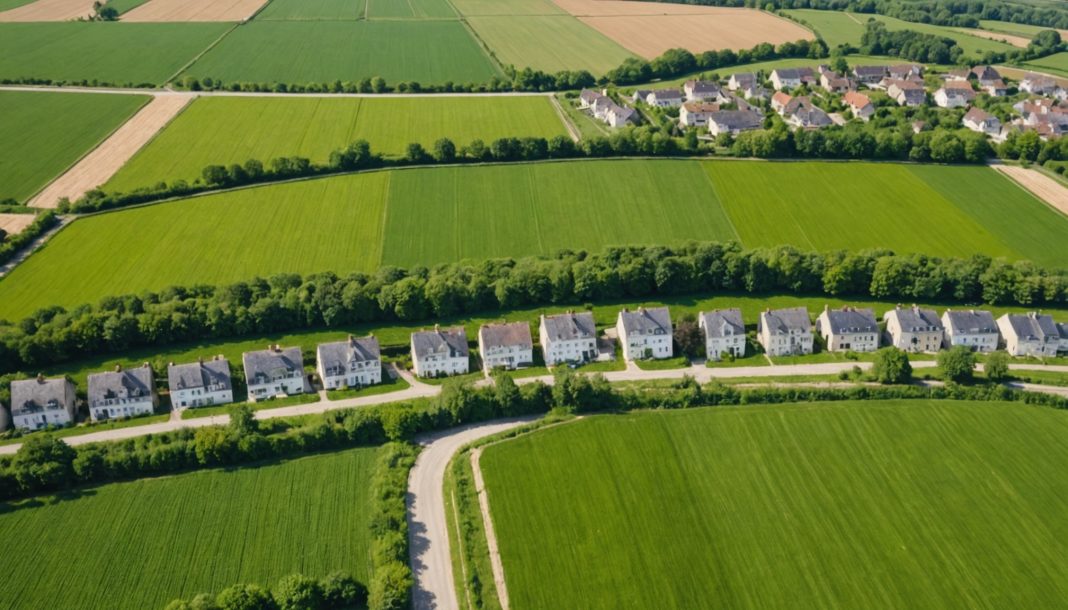
This is the least highlighted finding, even though it is central: the leading pressure identified on biodiversity in France is neither pollution nor even climate change directly, but land artificialization — that is, the conversion of natural or agricultural land into built-up areas, roads, or parking lots. It outranks intensive farming and pollution among the causes of habitat degradation.
In practical terms, this means the gradual disappearance of hedgerows, meadows, and wetlands in favor of paved-over surfaces. Farmland bird populations, for example, have dropped by nearly 30% in thirty years, a decline already documented in our coverage of the decline of birds and bats in France.
Why this figure concerns everyone
- Every new housing development, logistics warehouse, or parking lot built on agricultural or natural land adds to this national land artificialization total.
- Local authorities are now required to slow this pace, as part of the nationwide “net zero land artificialization” target.
- At the scale of a garden or a neighborhood, limiting paving over land and preserving a hedgerow or a pond directly helps curb this pressure, as shown by the 28 nature restoration projects recently supported across France.
A situation made worse by climate extremes
This report comes after a summer of 2026 marked by unprecedented heat records in France, adding further pressure on habitats already weakened by land artificialization. Some species beneficial to crops, such as parasitoid wasps useful to agriculture, are facing both stress factors at once. The report's authors note that scientific monitoring alone is not enough: it must be paired with concrete decisions and on-the-ground action to reverse the trend.
Find more analysis in our Ecology & Climate section and our Science and Technology coverage.
Frequently Asked Questions
What is land artificialization?
It is the conversion of natural, agricultural, or forested land into built-up areas, roads, or parking lots, which eliminates habitats needed by local wildlife and plants.
Who published this report on French biodiversity?
It is the 4th report under the EU “Habitats, Fauna, Flora” directive, produced by the Muséum national d'Histoire naturelle (France's National Museum of Natural History) in collaboration with the Office français de la biodiversité (the French biodiversity agency), published in early September.
Is the situation improving compared with the previous assessment?
No: the share of unfavorable evaluations rose from 64% to 67%, and the share of species and habitats in good conservation status fell by 26% compared with the previous period.
Sources
- Faune Sauvage — 2026 biodiversity report in France
- Consoglobe — the state of biodiversity in France and worldwide in 2026
- Actu-Environnement — biodiversity news
This article was written with the help of artificial intelligence. Editorial policy

