


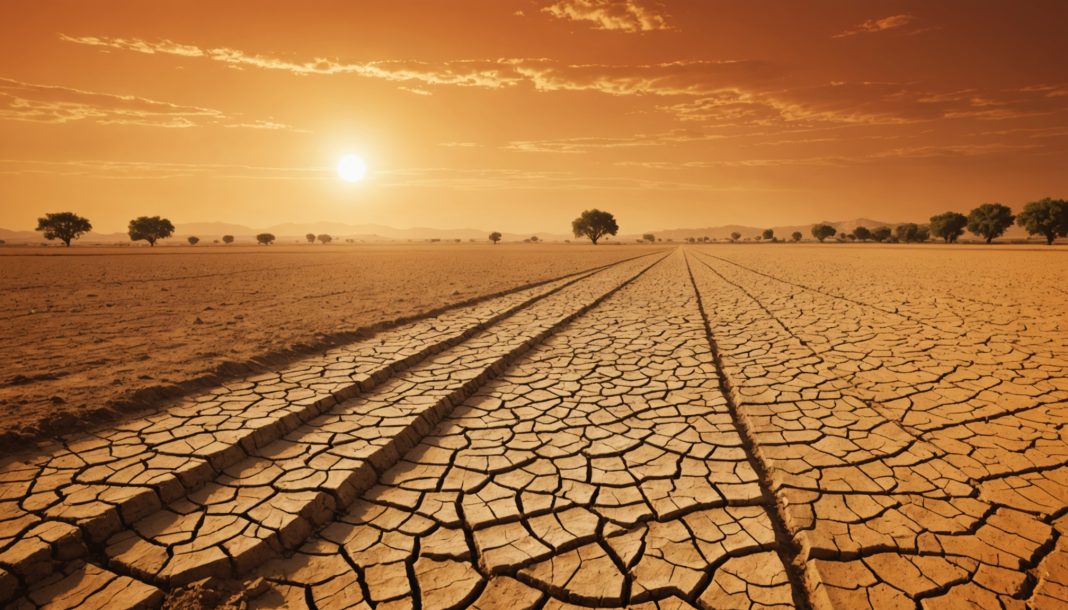
After a historic summer, Météo-France has just driven the point home: September also broke records, confirming that the extreme heat was not an isolated incident but an underlying trend. According to the climate report published on October 2 by the institute, September 2026 ranks as the second-hottest September ever recorded, with an average temperature 3.1°C above normal, and the third-driest since 1958, with a precipitation deficit of 70% across the country.
The soil tells an even more worrying story: by late September, the national soil moisture index had reached a level never before observed at this time of year. The direct consequence on the ground: as of September 23, 81,300 people in metropolitan France still depended on water tankers or bottled water for their supply.
A Summer That Was Already Anything But Ordinary
This new report confirms what summer 2026 had already suggested: with an average temperature of 24.0°C, or 3.6°C above the 1991-2020 reference period, it is the hottest summer ever measured in France since records began in 1900. During this period, 90% of the country topped 35°C at least once, 45% crossed the 40°C mark, and the country experienced 53 consecutive days of heat wave, an absolute record.
In its own report, Météo-France acknowledges that “a summer this hot remains rare in today's climate.” But that is precisely where the message becomes worrying: the institute's projections indicate that what is exceptional today will, within a few decades, become just another summer rather than a standout event.
What the Projections Show
According to the warming scenarios studied by Météo-France, the extreme conditions of 2026 would become an ordinary summer in a France that has warmed by +4°C compared to the start of the 20th century, a threshold that several intermediate emissions trajectories place around 2100. Closer to the present, at the +2.7°C level anticipated around 2050, heat waves of a duration comparable to that of 2026 (around 55 days) could occur once every twenty years, compared with an isolated event today.
- September 2026: 2nd-hottest September, 3rd-driest since 1958
- Summer 2026: +3.6°C above the 1991-2020 normal, the hottest since 1900
- 81,300 people dependent on bottled water or water tankers at the end of September
- At +2.7°C (around 2050): summers comparable to 2026 every 20 years
- At +4°C (around 2100): this type of summer would become the norm, with up to ten times more heat wave days than during the 1990s
Consequences That Keep Piling Up
This shift is already reflected in public policy choices: at Bercy (the French finance ministry), the government is considering raising the cap on the Livret A savings account to 30,000 euros to fund climate adaptation investments. On the ground, solutions to offset the decline in groundwater levels are multiplying, from regulated agricultural water reservoirs to treated wastewater reuse networks, though they don't always make up for the deficit observed over several consecutive months.
For households and local governments alike, the message from climate scientists is now unambiguous: it's no longer about preparing for an exceptional episode, but about anticipating a lasting shift in France's climate toward longer, drier, and hotter summers, with winters and autumns that will have to absorb a growing share of precipitation. This topic fits into our broader environment and climate coverage, also worth following on our home and garden pages for everyday adaptation tips.
Frequently Asked Questions
Did September 2026 really break records in France?
Yes. According to Météo-France's climate report published on October 2, 2026, it was the second-hottest September and the third-driest since records began in 1958.
Will summer 2026 remain an isolated case?
No, according to Météo-France's projections. A summer with characteristics comparable to 2026 could occur once every twenty years as early as 2050, and then become an ordinary summer around 2100 if warming reaches +4°C compared to the start of the 20th century.
What are the concrete consequences of this prolonged drought?
At the end of September 2026, 81,300 people in metropolitan France still depended on water tankers or bottled water for their supply, and the national soil moisture index reached an unprecedented level for the season.
Sources
- Franceinfo: France had its second-hottest September on record
- Météo-Paris: Summer 2026, a climate fluke or a glimpse of the future?
- Météo-Paris: toward a gradual return of rain in October 2026
This article was written with the help of artificial intelligence. Editorial policy

