


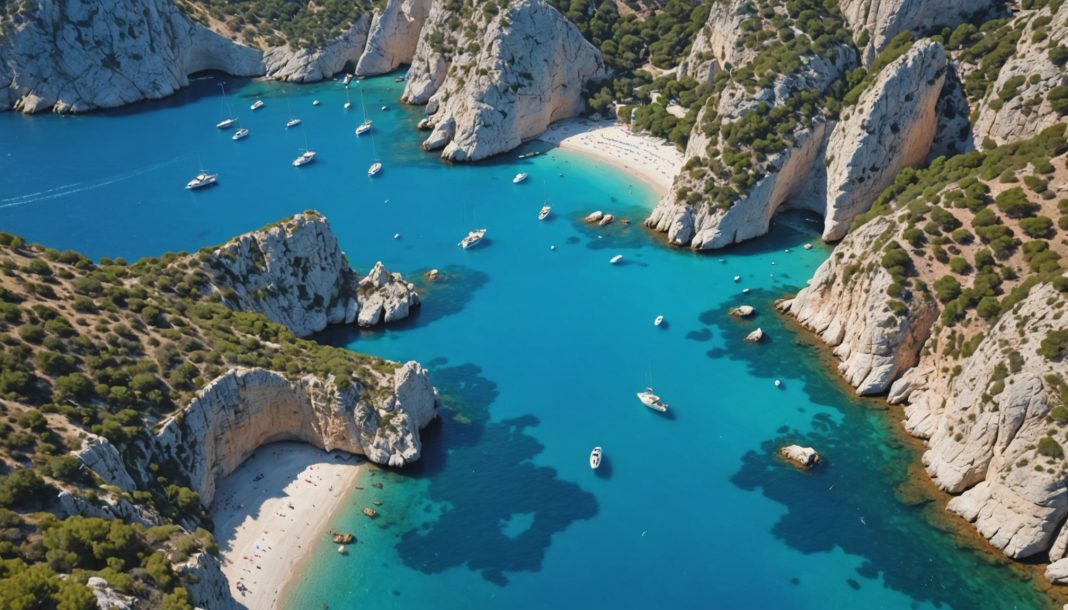
The Sugiton cove, the island of Porquerolles, the island of Bréhat: this summer, several of France's most beautiful natural sites are imposing a visitor quota to avoid overcrowding. It's a small revolution in our vacation habits, one that now requires planning ahead before laying down a beach towel.
Sugiton: Mandatory Reservations in the Calanques
In the Calanques National Park, near Marseille, the Sugiton cove now admits only 400 people per day, from June 27 to August 30. Reservations, which are free, are made online through the Troov platform, for groups of up to 5 people. Time slots open three days in advance at 9 a.m. and close the day before at 6 p.m.: it's best to plan ahead so you don't miss your reservation window.
Porquerolles and Bréhat: Different Thresholds, the Same Goal
On the island of Porquerolles, in the Var department, the cap is set at 6,000 visitors per day from late June to late August, a measure unchanged since 2021 and backed by a charter signed with seven ferry companies that serve the island. Over in Brittany, on the island of Bréhat, in the Côtes-d'Armor department, a municipal order limits visitor arrivals to 4,700 people on weekdays, between 8:30 a.m. and 2:30 p.m., from July 28 to August 22.
In all three cases, the logic is the same: local authorities and managers of natural areas are seeking to balance welcoming the public with preserving fragile ecosystems that come under heavy pressure from summer crowds.
Why These Measures Are Spreading
- Visitor numbers at some iconic sites have surged in recent years, to the point of threatening vegetation, local wildlife, and soil quality.
- Repeated heat waves are increasing the vulnerability of these environments, which are already weakened by trampling and erosion.
- Site managers are relying on online reservations rather than outright bans, in order to keep access open to as many people as possible while smoothing out peaks in attendance.
- This trend is part of a broader movement against overtourism, which affects natural sites as well as certain heavily visited urban centers.
In practical terms, for anyone planning a nature getaway to one of these sites, the approach to take is simple: check the reservation process on the manager's official website ahead of time, plan for a backup option in case time slots are full, and, if possible, favor a visit outside peak hours. These precautions, which require a bit of extra planning, are increasingly becoming part of preparing summer leisure activities, just like booking accommodations or a restaurant table.
Beyond the inconvenience, these measures also offer visitors a concrete benefit: fewer crowds on site, a more pleasant experience, and a natural setting better preserved for future seasons. All the more reason to also look into local services and local information points before heading out.
Frequently Asked Questions
Do you have to pay to reserve access to these natural sites?
No, in the cases of Sugiton and Bréhat, the reservation or access permit remains free. Its only purpose is to regulate flow, not to charge an entrance fee.
What happens if the daily quota is reached?
Access is simply closed or postponed until the next day: it's best to have a backup plan (another nearby beach or cove) in case time slots are full.
Do these quotas apply only in the summer?
Yes, in most cases the restrictions apply during a specific summer period, generally from late June to late August, the time of highest tourist attendance.
Sources
This article was written with the help of artificial intelligence. Editorial policy

