


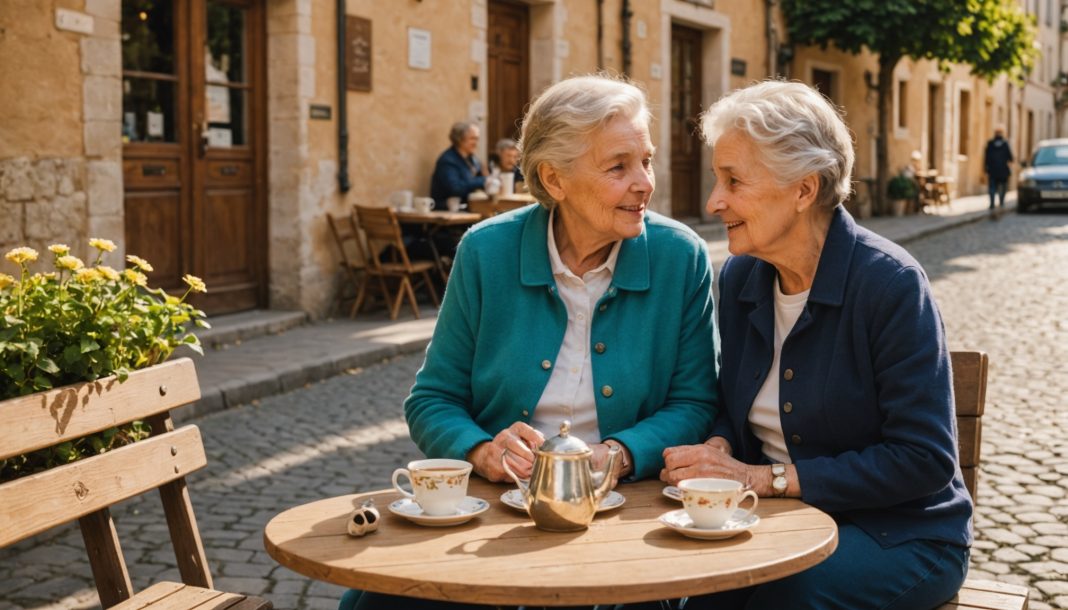
In the Doubs, as in many other French departments, a new call for volunteers has just been launched to recruit participants for the Service Civique Solidarité Seniors program. This program, which allows young people ages 16 to 25 to support isolated elderly people, is seeing a fresh wave of recruitment in 2026 as the new school year approaches. It's a good opportunity to take a closer look at this grassroots service, which, five years after its creation, has become one of the most concrete tools in the fight against loneliness among seniors in France.
A Program Born to Address a Silent Emergency
Launched at the initiative of Unis-Cité and its partner Malakoff Humanis, with support from the French ministry in charge of elderly autonomy, the program is based on a simple observation: several hundred thousand elderly people in France report suffering from loneliness, a figure that climbs even higher in rural areas, where shops, transportation, and public services have gradually moved further away from residents' daily lives. In response, the civic service program dedicated to seniors sends young volunteers directly into people's homes or care facilities for friendly visits, help with digital tools, or support during outings.
Five Years of Action and Numbers That Speak for Themselves
Since its launch, the program has brought together tens of thousands of young volunteers, who have worked with hundreds of thousands of seniors through more than three thousand partner organizations across the country, including overseas territories. Evaluations conducted among beneficiaries speak for themselves: nearly all of the seniors who received support report an improvement in their mood, while a large majority of former volunteers recommend the experience to other young people. These results explain why recruitment campaigns keep being renewed and gradually expanded, like the one currently underway in several local areas.
A Model That Fits Into the Network of Local Services
This type of program reflects a broader trend: the reinvention of personal care and support services through local, grassroots solutions, driven by nonprofits, local governments, and volunteer networks rather than large centralized organizations. Young volunteers thus complement, without replacing, the work of professional home care aides and local organizations that support seniors. In rural areas, this network increasingly combines with other solidarity initiatives, such as volunteer-based transportation to medical appointments or errands, or with reintegration and training projects run by the same nonprofit networks.
How to Become a Volunteer or Request Support
Applications are submitted directly to accredited host organizations or through platforms dedicated to the Service Civique program. The assignment, which comes with a stipend, typically lasts between six and twelve months, at about twenty-four hours a week. Families or seniors themselves can also request support by contacting local partner nonprofits, which can often be identified through municipal social action centers (CCAS) or France Services centers. This single point of contact makes it easier to access a service that, until now, has remained too little known in some areas.
- Target audience: young people ages 16 to 25 (up to 30 for those with disabilities)
- Length of assignment: 6 to 12 months, about 24 hours a week
- Monthly stipend paid to the volunteer, covered partially or fully depending on the volunteer's profile
- Host organizations: nonprofits, nursing homes (EHPAD), senior residences, CCAS
Frequently Asked Questions
Who can become a Service Civique Solidarité Seniors volunteer?
Any young person ages 16 to 25, or up to 30 for those with disabilities, can apply to accredited organizations, with no diploma required.
Does this program replace professional home care aides?
No, it complements their work: young volunteers provide social connection and companionship, while daily care and assistance remain handled by trained professionals.
How can an elderly person receive support?
All it takes is reaching out to a local partner organization, a municipal social action center (CCAS), or a France Services center to be connected with a volunteer.
Sources
- French Ministry of Labor and Solidarity
- Service Civique Solidarité Seniors — press release
- macommune.info — mobilization in the Doubs
This article was written with the help of artificial intelligence. Editorial policy

