


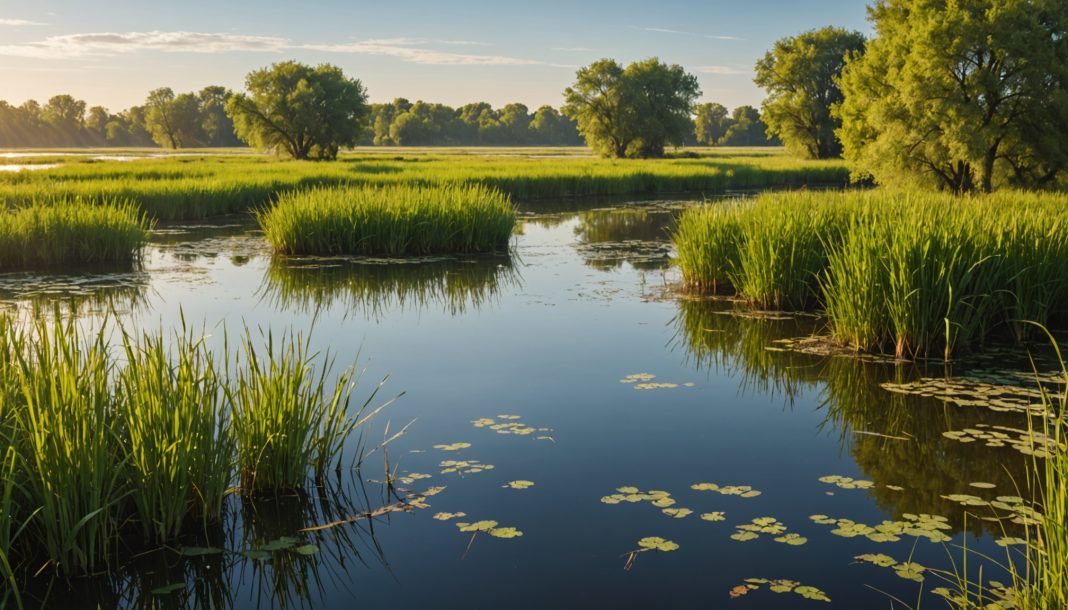
Wetlands, dunes, peat bogs, forests, flat oyster reefs: all across France, dozens of local biodiversity restoration projects have just received a decisive financial boost. The national program behind them is reaching a new milestone this year, with a record number of applications and a budget that now exceeds 21 million euros mobilized since its creation.
A Call for Projects in High Demand
Run since 2023 by the French Biodiversity Office (OFB) in partnership with FDJ United, the program works on an original principle: a portion of the stakes from scratch-off games and special drawings is channeled into funding ecological restoration projects led by local governments, associations, or managers of natural areas. For this new edition, launched in the spring and whose results were announced on July 8, 128 applications were submitted, an unprecedented level reflecting growing mobilization among field organizations.
At the end of the selection process, 28 new projects were chosen, bringing the total number of projects supported since the program's launch to 92. More than 9 million euros were collected through this edition's drawings, adding to the 21 million euros already raised across the entire program.
Projects Across Every Ecosystem in the Country
The diversity of the winning projects mirrors that of France's natural environments. They include restoration work on wetlands, peat bogs, and waterways, renaturation projects for forests, dunes, and grasslands, as well as interventions on marine and coastal habitats. Several projects focus on protecting emblematic species, such as bats, the European mink, wetland birds, and flat oyster reefs, once abundant along the Atlantic coast.
The program isn't limited to mainland France: projects are also being funded in Guadeloupe, Réunion, New Caledonia, and Saint-Martin, where the challenges of preserving tropical and overseas ecosystems are just as pressing.
- 92 projects supported in total since 2023
- 28 new winners this year, out of 128 applications
- More than 21 million euros mobilized since the launch
- Projects in both mainland France and overseas territories
Why This Momentum Matters
Beyond the figures, this kind of participatory funding allows local organizations, often small ones, to carry out restoration projects they couldn't have financed on their own. Federations of nature reserve conservatories, naturalist associations, and rural local governments are among the program's regular beneficiaries, which has already supported 64 winning sites since its creation. The program has now been extended until 2027, suggesting new waves of projects in the years ahead, at a time when preserving natural habitats is becoming a central issue amid growing climate pressures.
For residents curious about nature, many of these projects are visible or accessible, especially during outings organized by the associations behind them. It's a great opportunity to discover, close to home, spaces undergoing a full ecological rebirth — a theme that also connects with the desire for nature getaways in our Travel section, or tips for greening your own yard in our Home & Garden section.
Frequently Asked Questions
Who can apply for this type of program?
Local governments, nature conservation associations, and managers of natural areas (conservatories, parks, reserves) can submit an application when the call for projects opens each year.
How is the program funded?
It relies on a portion of the stakes collected through scratch-off games and special drawings, which is passed on to the French Biodiversity Office to fund the selected projects.
Where do the supported projects take place?
Across the entire country: wetlands, forests, coastlines, and grasslands in mainland France, as well as in Guadeloupe, Réunion, New Caledonia, and Saint-Martin.
Sources
- French Ministry for Ecological Transition
- French Biodiversity Office
- French Federation of Nature Reserve Conservatories
This article was written with the help of artificial intelligence. Editorial policy

