


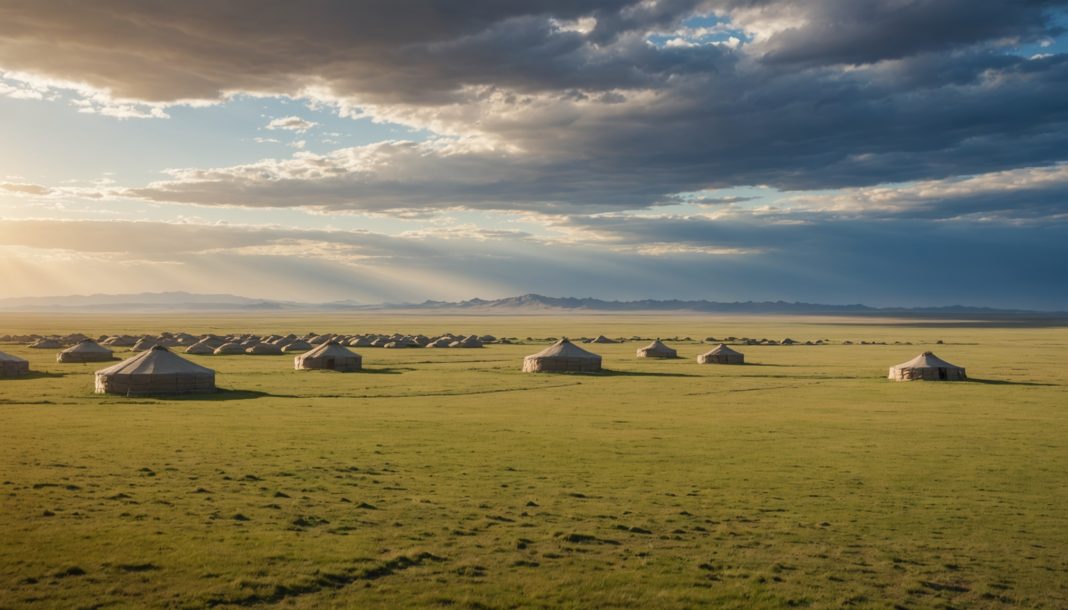
From August 17 to 28, Ulaanbaatar, the capital of Mongolia, is hosting COP17, the 17th Conference of the Parties to the United Nations Convention to Combat Desertification (UNCCD). Several thousand delegates from the convention's 197 Parties, along with representatives of states, businesses, civil society, scientists, young people, Indigenous peoples, and pastoral herders, are gathered around a shared goal: reaching a binding global agreement on drought, which remained unfinished at the previous summit in Riyadh.
A Host Country With a Direct Stake
The choice of Mongolia as host country is no coincidence. With a territory of 1.56 million square kilometers, the country is among the nations most affected by land degradation: nearly 82% of Mongolian territory is now considered degraded, due to the combined effects of overgrazing, climate change, and the expansion of arid zones. Held under the theme “Restore the Land, Restore Hope,” the conference also falls within the International Year of Rangelands and Pastoralists (IYRP), proclaimed by the United Nations, which highlights the role of more than one billion people who depend directly on pastureland for their livelihoods.
What's Actually at Stake
Contrary to an image that sometimes remains theoretical, COP17's negotiations deal with very concrete issues:
- Recognition of pastoralism as a sustainable way of managing arid ecosystems, rather than as a factor worsening desertification;
- The definition of common indicators to measure soil degradation and track the restoration commitments made by states;
- Funding for drought-control programs in the most vulnerable regions, where the loss of arable land fuels instability and forced migration.
France's agricultural research center, Cirad, present in Ulaanbaatar, is particularly emphasizing the need to involve pastoral herders in decision-making rather than treating them merely as victims of the phenomenon.
A Packed Year for Environmental Diplomacy
COP17 on desertification actually opens an unprecedented triptych: the three major conventions stemming from the 1992 Rio Earth Summit are each holding their Conference of the Parties this year. After Ulaanbaatar in August, the biodiversity COP will be held in Armenia in October, followed by the climate COP in Turkey in November. According to several delegations, this sequence should help better coordinate responses to crises that are often addressed separately even though they worsen one another: drought, biodiversity loss, and global warming.
For France, which has regularly faced drought episodes on its own territory in recent years, these negotiations are being closely followed, particularly regarding funding and the soil-monitoring tools that could inspire national policy.
The closing session, scheduled for August 28, is expected to produce a final declaration. Delegations remain divided, however, over the funding mechanisms to be put in place, particularly regarding the share that the most industrialized countries should bear compared with the countries most exposed to desertification.
Frequently Asked Questions
What is COP17 on desertification?
It is the 17th Conference of the Parties to the United Nations Convention to Combat Desertification, an international treaty adopted in 1994 to fight land degradation and drought.
Why was Mongolia chosen as the host country?
Because it is among the countries most affected by desertification, with about 82% of its territory degraded, making it a powerful symbol for carrying the negotiations forward.
What is the main issue at stake in the negotiations?
Reaching a binding global agreement on drought, a topic that remained unresolved at the previous summit in Riyadh, as well as securing funding commitments for land restoration.
Sources
UNCCD — 17th session of the Conference of the Parties
Cirad — COP17 desertification: the role of pastoralism
Espèces-menacées.fr — COP17 in Mongolia
This article was written with the help of artificial intelligence. Editorial policy

