


The 48th session of the UNESCO World Heritage Committee opened on July 20, 2026, in Busan, South Korea, where it will run until July 29. For ten days, representatives of member states are reviewing 30 new nominations for inscription on the prestigious World Heritage List, as well as the state of conservation of 147 sites already listed. It is an international event watched closely, including in France, which is championing two emblematic nominations this year.
A Historic First for South Korea
This is the first time South Korea has hosted this annual session, UNESCO's most important decision-making body on heritage matters. The port city of Busan, the country's second-largest city, held an opening ceremony on July 19, accompanied by cultural festivities throughout the month. For the host country, the event is also a showcase: it illustrates Asia's growing role in global cultural diplomacy, a topic we regularly cover in our Literature and Culture section.
Thirty Nominations from Five Continents
The deliberations include 30 proposals to inscribe new sites, along with 3 requests to modify properties already on the list. France is presenting two highly anticipated nominations:
- The D-Day Landing Beaches in Normandy: a vast land and maritime complex covering the five sectors of June 6, 1944 (Utah, Omaha, Gold, Juno, and Sword), spanning more than 80 kilometers of coastline. Filed in 2018, the nomination was put on hold while UNESCO clarified its doctrine on memorial sites, before being relaunched in 2024.
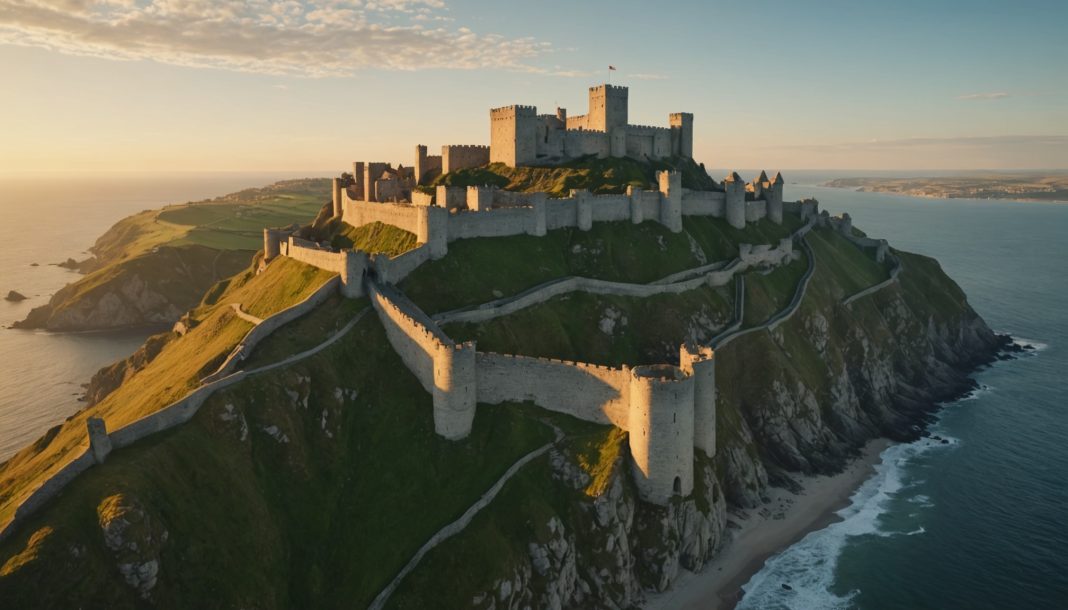
- The Royal Fortresses of Languedoc: a network of eight monuments spread across the Aude and Ariège departments, including the citadel of Carcassonne and the castles of Aguilar, Lastours, Montségur, Peyrepertuse, Puilaurens, Quéribus, and Termes. Built in the 13th century under Louis IX, they once guarded the border between the kingdoms of France and Aragon. The nomination was officially filed in January 2025.
Other countries are also putting forward notable nominations, such as Greece, which is seeking the inscription of Mount Olympus, a mythological summit and major nature reserve. Decisions are expected by the close of the session on July 29, 2026.
What Does an Inscription Actually Change?
Being inscribed on the UNESCO World Heritage List is first and foremost a form of recognition: that of “outstanding universal value,” which places the site under humanity's collective responsibility. In practical terms, inscription brings:
- immediate international visibility, which often translates into an increase in tourist numbers — a challenge well known to the destinations covered in our Travel and Tourism section;
- a binding commitment from the state to protect and sustainably manage the property, with regular monitoring by UNESCO;
- access to international cooperation and assistance mechanisms in case of threats.
Inscription, however, is not a permanent guarantee: a poorly protected site can be placed on the List of World Heritage in Danger, or even removed from the List altogether, as happened with the Liverpool maritime port in 2021.
Heritage Under Growing Pressure
Beyond new nominations, the Committee devotes a large part of its work to reviewing the state of conservation of 147 properties already inscribed. Climate change, urbanization, tourism overcrowding, and armed conflicts are among the main documented threats. The rise in environmental dangers, a topic we cover in our Ecology and Climate section, is pushing the organization to strengthen international cooperation around the most vulnerable sites. Experts are quick to point out: inscription is a starting point, not an endpoint.
Frequently Asked Questions
When will the Committee's decisions be known?
Verdicts on the 30 nominations under review will be handed down over the course of the debates, by the close of the 48th session, scheduled for July 29, 2026, in Busan.
How many nominations is France championing this year?
Two: the D-Day Landing Beaches in Normandy and the Royal Fortresses of Languedoc, a network of eight monuments between the Aude and Ariège departments, including the citadel of Carcassonne.
Is a World Heritage inscription permanent?
No. A threatened site can be placed on the List of World Heritage in Danger, and a site whose value is deemed compromised can be delisted, a rare but already-applied procedure.
Sources
- UNESCO — World Heritage Committee Will Examine New Nominations
- The Korea Herald — UNESCO World Heritage Committee Opens in Busan
- Aude Department — Carcassonne and the Royal Fortresses of Languedoc in the Running for UNESCO
This article was written with the help of artificial intelligence. Editorial policy

