


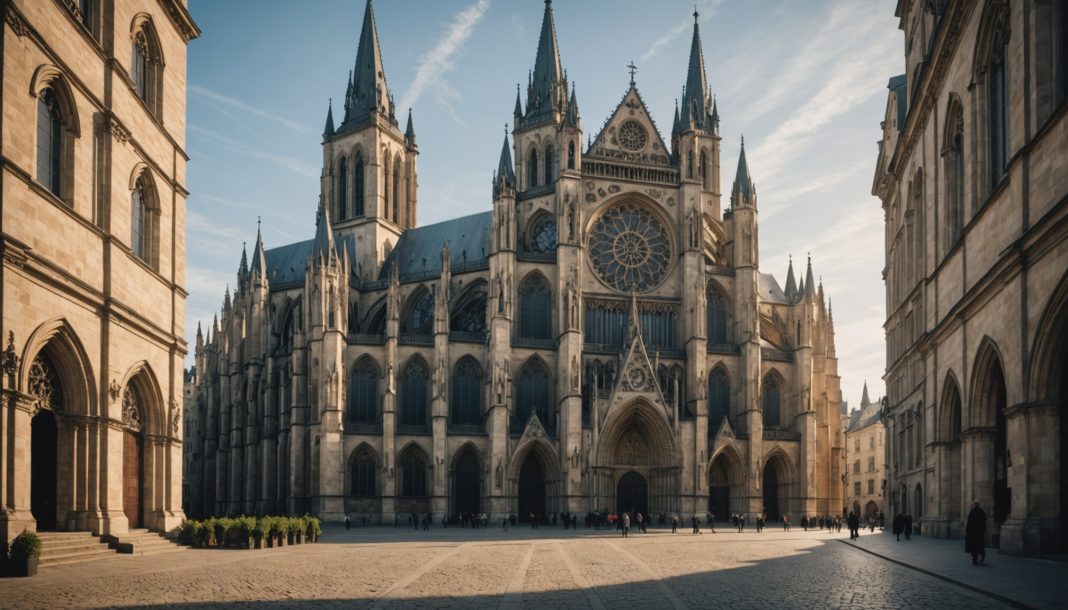
Pope Leo XIV concluded his apostolic journey to France on September 28, 2026, with an unprecedented stop: Metz, in the Moselle department, where no pope had visited since John Paul II in 1988. After Paris, Saint-Denis, and Lourdes, this final day was devoted to interreligious dialogue and European unity.
A Day Built Around Europe's Heritage
Arriving at Metz-Nancy-Lorraine Airport at 9:20 a.m., the pope first took part in an interreligious meeting at the Robert Schuman Conference Center, before celebrating a 4 p.m. Mass at Saint-Étienne Cathedral, known for its 6,500 square meters of stained glass. The choice of location was no accident: it was at the Robert Schuman Center, named after the Lorraine-born statesman regarded as one of the founding fathers of European integration, that the pontiff delivered a speech titled “At the Roots of Europe, for Peace and Unity.”
Born in Luxembourg and raised in Moselle, Robert Schuman was behind the Declaration of May 9, 1950, which laid the groundwork for what would become the European Union. By anchoring his visit in this region, Leo XIV sought to link the continent's religious and political memory, at a time when the European Union has been stepping up initiatives to assert its weight on the world stage, including the unprecedented trade agreement with India concluded a few months earlier.
Peacemakers Facing Global Tensions
Addressing religious leaders from several faiths, the pope called for making dialogue “a path of friendship, peace, and fraternity.” This appeal comes as international bodies themselves seek to regulate new threats to peace: the UN and the International Committee of the Red Cross, for example, are calling for a legal framework for autonomous weapons, a sign that multilateral diplomacy is searching for new bearings.
France, for its part, continues to confirm its role as a diplomatic crossroads: a few weeks before hosting the pope, the country had already organized an international summit on the congestion of Earth's orbit. Two very different events, yet both revealing of a capital and a country that remain essential waypoints for major world discussions.
What This Visit Changes (and Doesn't Change)
- First papal visit to Metz since 1988, the year John Paul II came.
- A condensed, single-day format, unlike the longer stops in Paris and Lourdes.
- A message focused on European unity rather than a strictly French issue.
- No new political or doctrinal announcements: the visit remains pastoral and symbolic.
For the residents of Metz, the event mainly had a very concrete impact: secured streets, tens of thousands of expected visitors, and a cathedral—a major travel and tourism destination in Lorraine—placed in the spotlight for an afternoon. On the international stage, the visit also fits into broader reflections on international law and cooperation, at a time when several religious and diplomatic institutions are seeking to influence the world's major balances of power.
Frequently Asked Questions
Why did the pope choose to visit Metz?
The Vatican presented this stop as a tribute to the European roots of peace, since Metz is home to the Robert Schuman Conference Center, dedicated to one of the founders of European integration.
Who was the last pope to visit Metz?
John Paul II visited the city in 1988. Leo XIV is therefore the first pope to return there in nearly forty years.
What is the connection between Robert Schuman and Europe?
Born in Luxembourg and educated in Moselle, Robert Schuman authored the Declaration of May 9, 1950, considered the founding act of European integration.
Sources
Vatican News ·
Latin Times ·
City of Metz
This article was written with the help of artificial intelligence. Editorial policy

